The Missing Structure in a Fragmented World

Why Graphs Matter Now

We’ve built AI systems that can predict, write, and generate.
We’ve built data pipelines that move petabytes across clouds.

But ask most systems:
“How are these things connected?”
And you’ll often get silent response or a sketchy one.

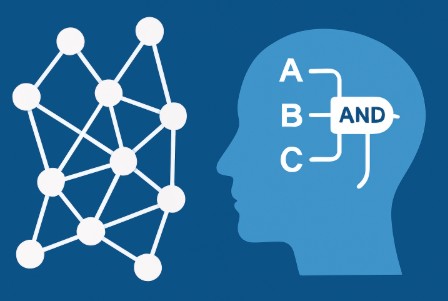
That’s where graph thinking comes in, not just as a data model, but as a way of seeing the world.

Graphs let us:

  • Represent relationships, not just records,
  • Understand context, not just content,
  • Build reasoning systems where logic is traceable, explainable, and human-aligned.

And yet, most organizations still think in rows and columns, even as they claim to be AI-driven.

What We Will Explore

In this category, we’ll cover:

  • The difference between graph models and traditional databases,
  • Why graph-native reasoning is essential for explainable and ethical AI,
  • How graph thinking can unify data strategy, AI strategy, and even Quantum models (oh, I love this one and this topic alone is worth you clicking the subscribe button and following me on LinkedIn for latest developments),
  • Use cases in healthcare (to start with), and more.

Graphs aren’t a niche tool. They’re an opportunity to rebuild meaning, one connection at a time.

I am currently designing a new graph-native, explainable, Quantum aware programming language to called Chilán. Subscribe to this blog and follow me on LinkedIn to get early exposure to it.

Related posts:
Data Strategy as Foundation | AI Strategy | The Hidden Thread
Navigating Probability-Infested Times

The Illusion of Intelligence

We are living in probability-infested times.

Text models predict the next word. Image models fill in noise. Code models autocomplete syntax. And all of them do so without true understanding.

This doesn’t just lead to hallucinated facts; It leads to hallucinated decisions, with very real consequences.

What We Will Explore

Generative AI is the new kid in town and everyday, we hear more people claiming years and years of experience in it (as well as tons of experience in Agentic AI and god knows what else). Anyway, it is not possible to ignore the beast so, that alone means it deserves its own category. Having said that, let me be clear that, in the right hands (or as those in the hood call it, with the right prompt) it can be a wonderful tool that can massively boost our productivity.

I am actually a big fan, as you will see throughout the coming posts, but, I refuse to ignore its deficiencies or sell perceived capabilities that are simply not there yet (and some of those capabilities are unlikely to ever be there as those are tightly coupled with the initial assumptions and the overall approach). Think of it this way, if real AI (or AGI as some will call it) is compared to Relativity, then the current Generative version of AI is equivalent to Newtonian Mechanics (I love Newton, but there are problems that his wonderful laws of Mechanics are just not equipped to answer, hence the birth of Relativity and the emergence of a certain Albert Einstein).

Now, enough of this. For this introductory post, let’s say that under Generative AI category, we will cover many topics including the following:

  • Why relying exclusively on probabilistic logic is both risky and regressive,
  • What AI Agents vs. Agentic AI really means.
  • Silly but illuminating examples of probabilistic failure in daily life that can help in our overall understanding of Generative AI, its strengths and its limitations,
  • How we might use Quantum logic, structured data, and human values to rebuild trust.

This space is crowded with hype. Our aim here is to teach clearly, challenge assumptions, and reclaim agency.

The above tagline was originally written as “Our aim here is to cut through the hype and some monumental BS so that we can better understand our assumptions and see more clearly.” The end result, however, is a revision by ChatGPT:-). I think we can all agree that ChatGPT’s output is more succinct and certainly more polite so, hats off to ChatGPT here. Like I said, if you know how to use these toys, they find a way to please you.


Related posts:
Quantum Computing | AI Ethics | The Hidden Thread

A Chance to Reclaim Logic in an AI World: Rationality at Scale!

The Paradox

Ironically, the most probabilistic field in science, Quantum Physics, might help us restore structure and logic to the AI ecosystem!

Where classical AI is drifting toward black-box opacity, Quantum gives us an opportunity to:

  • Represent complexity with nuance,
  • Model relationships more organically,
  • Reintroduce logic-based computation into systems currently driven by surface-level patterns.

Let’s not let Quantum go the way of Generative AI: all hype, no ethics.
I am optimistic on this and believe that we still have time to learn from AI hype, and in this series, we’ll explore how to use Quantum wisely.

What We Will Explore

In this category we will explore a number of topics including:

  • What Quantum can and can’t do (let’s demystify this thing once and for all and not let Quantum Computing become another Blockchain that nobody understands!),
  • How Quantum Computing could complement Agentic AI and ethical reasoning,
  • Why probabilistic computation might paradoxically help counterbalance the dark side of probabilistic AI.

Related posts:
AI Strategy | AI Ethics

Why Data Strategy Is the Foundation of AI, Quantum, and Everything Else

The Problem Nobody Talks About

Many organizations today are eager to adopt AI, deploy Generative models, or explore Quantum Computing. And yet, most still haven’t solved the basics.

Data strategy remains the weakest link.
Disparate systems, undefined ownership, unclear lineage, and some more, are not just annoying inefficiencies (and boy, are they annoying and inefficient!). They’re risks, sometimes big risks. And they prevent everything else from working responsibly.

You cannot build trustworthy, explainable, or ethical AI on a foundation of scattered, misaligned data.

If this resonates, my book Data Unplugged unpacks this in detail, no fluff, no buzzwords (I did not want to make this or any of my posts a sales pitch but, objectively speaking, this is a good book:-)).

What We Will Explore

I wrote these lines quickly as a starting point so that you get the idea what is coming in the next few weeks and after. I have a lot of stuff to go through and share with you and have to balance it between a number of categories so, if you have a specific topic in mind you cannot wait for, send me a comment. And now that we are talking about topics my readers would want me to talk about next, I promised my dear friend Willem to write something juicy on Data Strategy next so, once I have put in a few lines under each category in the blog, I will jump on Data Strategy again.

Anyway, in the Data Strategy category, I will discuss the following and then some more:

  • Why data strategy is not just technical architecture, but organizational architecture,
  • The link between governance, ethics, and business value,
  • Why most enterprises are still operating on data sandcastles.

Related posts:
25 Not-To-Dos of Data | The Hidden Thread